
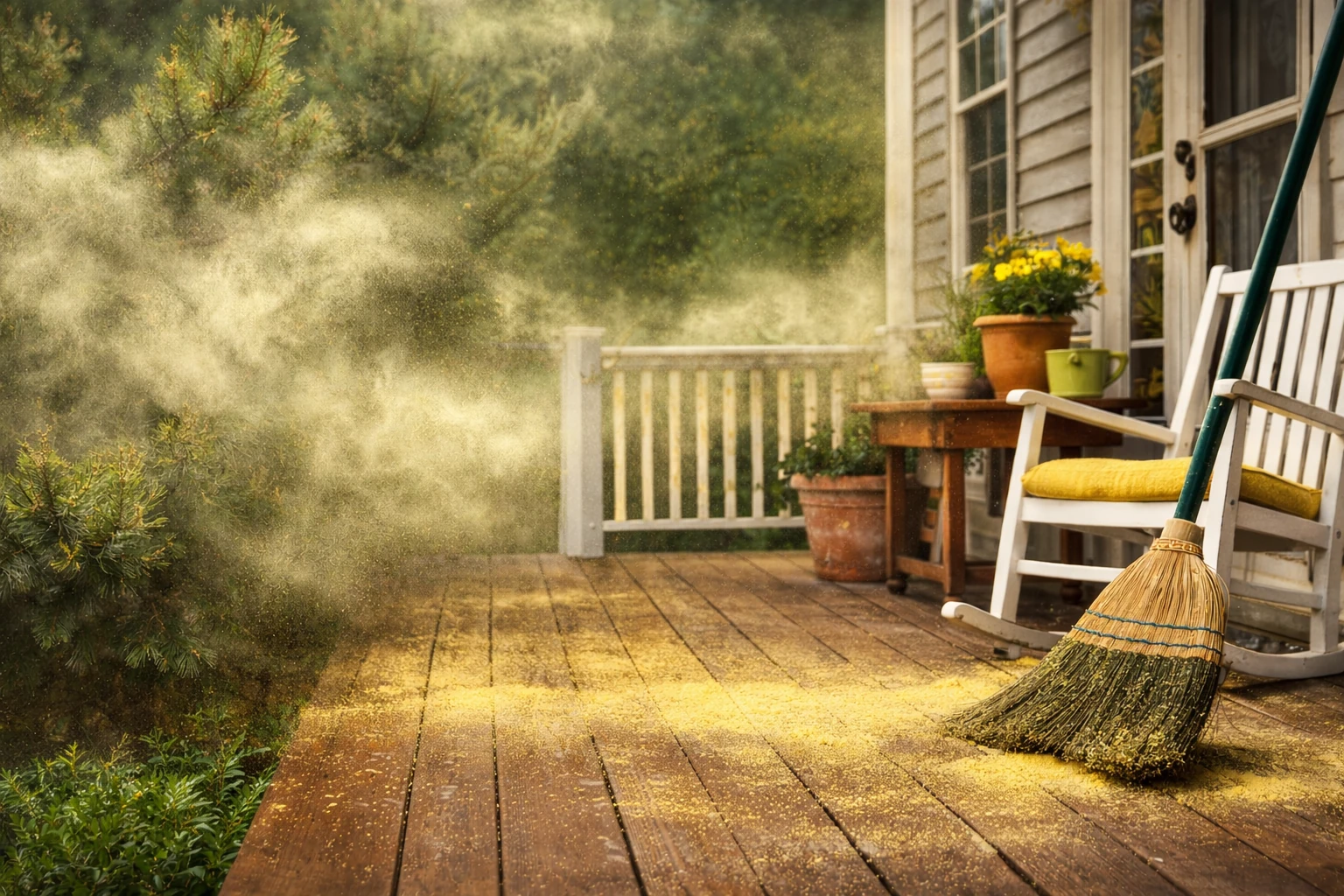
Spring in South Carolina is beautiful—until everything turns yellow. If your porch, windowsills, and entryway are coated in pollen, you’re experiencing “The Pollening.” This step-by-step guide to pollen cleaning in South Carolina helps you reduce indoor allergens, protect your surfaces, and keep your home comfortable during peak season.
In this article:
Quick note on indoor air quality: Pollen is considered a biological pollutant that can affect indoor comfort—especially for allergy and asthma-sensitive households. For official background and guidance, see the EPA’s indoor air quality resources and biological pollutants overview. EPA Indoor Air Quality and Biological Pollutants & IAQ.
Why “The Pollening” Hits South Carolina Homes So Hard
In South Carolina, pollen settles heavily on porches, patio furniture, railings, and entry areas. From there, it tracks inside on shoes, pets, and airflow—collecting on floors, baseboards, and soft surfaces. Effective pollen cleaning in South Carolina starts outdoors, then moves indoors in the right order to reduce repeat cleaning and improve comfort.
Start Outside: How to Remove Yellow Pollen From Your Porch (The Right Way)
Your porch is the “pollen staging area.” If you lower the pollen load outside first, you’ll track less inside—and your interior cleaning will last longer.
- Dry removal first: Use a soft broom or dry microfiber tool to lift loose pollen from railings, corners, and furniture.
- Rinse top to bottom: Use a gentle hose rinse so pollen flows off surfaces instead of blasting into cracks.
- Wipe touch points: Door handles, railings, and outdoor tables transfer pollen fast—wipe them last with damp microfiber.
- Two-mat setup: Place one heavy-duty mat outside and a second mat inside to reduce tracking.
Common mistake: dry dusting indoors during peak pollen days
Dry dusting can push pollen back into the air. Use damp microfiber on hard surfaces and a vacuum with good filtration. The EPA explains how filtration helps reduce exposure to indoor pollutants. EPA Guide to Air Cleaners in the Home.
Entryway Control: The Fastest Way to Reduce Indoor Pollen
If you only change one thing during “The Pollening,” change your entryway routine. This is where pollen cleaning in South Carolina becomes dramatically easier.
- Shoes-off zone: Keep shoes near the door to avoid tracking pollen throughout the home.
- Weekly trim wipe-down: Damp-wipe door trim, handles, and light switches.
- Pet wipe routine: Wipe paws (and lower fur on high pollen days) before pets roam indoors.
Indoor De-Pollening: Room-by-Room Priority Checklist
Most homeowners start with the wrong tasks. Use this order for better results and fewer re-cleans:
1) Floors first (pollen settles)
- Vacuum slowly—especially near entryways and high-traffic paths.
- Damp mop hard floors to capture fine yellow dust.
2) “Pollen landing zones” (hard surfaces)
- Windowsills, blinds, baseboards
- Door trim, stair rails, light switches
- Tables and frequently used counters
3) Soft surfaces that hold allergens
- Upholstery and cushions (vacuum + brush attachment)
- Rugs and runners
- Bedrooms: headboards, nightstands, and under-bed areas
How Often Should You Clean During Peak Pollen Season in SC?
During the heaviest weeks, most South Carolina households see the best results with a simple routine:
- 2–3 times per week: Entryway floors + quick damp wipe of high-touch areas
- Weekly: Full floor cleaning + windowsills and baseboards in high-traffic rooms
- Every 2–4 weeks: A deeper reset for kitchens, bathrooms, and main living areas
When DIY Isn’t Enough: Signs You Need Professional Pollen Cleaning
If pollen returns quickly or your home never feels truly fresh, you may need a deeper reset. Professional pollen cleaning in South Carolina targets the overlooked buildup that standard routines miss—especially in high-touch and high-traffic areas.
- Allergy symptoms feel worse indoors than outdoors
- Pollen settles again within 24–48 hours
- Yellow residue collects around vents, baseboards, and windows
- You want a consistent maintenance plan through spring
For trusted pollen count context and how pollen levels are measured, the American Academy of Allergy, Asthma & Immunology (AAAAI) maintains the National Allergy Bureau resources. AAAAI Pollen Counts (NAB) and Pollen Counts Defined.
FAQ: Pollen Cleaning in South Carolina
What’s the fastest way to remove yellow pollen from a porch?
Start with dry removal (soft broom or microfiber) to lift loose pollen, then rinse gently from top to bottom. Finish with damp wipe-down of touch points so pollen doesn’t transfer back indoors.
Does pollen affect indoor air quality?
Yes. Pollen can settle into soft surfaces and become airborne when disturbed. The CDC notes pollen as an airborne allergen and explains related health impacts. CDC: Allergens and Pollen.
How do I keep pollen from tracking inside?
Use a two-mat setup, create a shoes-off zone, and wipe pet paws during peak days. Entryway control makes the biggest difference for pollen cleaning in South Carolina households.
Need Help During Peak Pollen Weeks?
If your home is fighting “The Pollening” week after week, a professional reset can make your space feel clean again—and easier to maintain. Our team provides residential cleaning services designed to support homeowners during pollen cleaning in South Carolina, helping maintain healthier and more comfortable living spaces throughout pollen season.
Leave a Reply